 +1-3236076188
 sales@marketmonitorglobal.com
 Log In
  Log In
 Global Brix Monitor Market to Reach $0.26 Billion by 2032, Growing at 4.1% CAGR
Wednesday,10 Jun,2026
Brix Monitor: Definition and Principles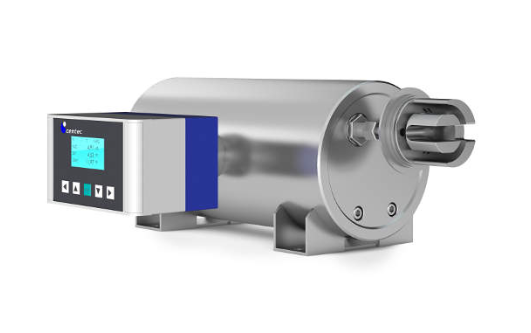
A Brix Monitor is a measuring instrument used to determine °Brix — the concentration of dissolved sugars and other soluble solids in a liquid solution, expressed as grams of sucrose per 100 grams of solution (percentage by weight). It operates on the principle of refractive index measurement: when light passes from air into a liquid sample, it bends (refracts) at an angle proportional to the sample's density and dissolved solids concentration. The instrument measures this bending angle and converts it, via calibration curves or internal algorithms, into a °Brix value.
While functionally similar to a Brix Meter Refractometer, the term Brix Monitor often implies a broader scope that includes not only portable/handheld instruments but also inline or process-mounted continuous monitoring systems. These systems are integrated into production lines to provide real-time, continuous Brix measurements without manual sampling, enabling closed-loop process control (e.g., automatic dilution or evaporation adjustment) and reducing labor costs. Brix Monitors are widely used in agriculture, food and beverage production, and quality control to assess sweetness, ripeness, formulation consistency, and process stability.
Key advantages of Brix Monitors over traditional analytical methods (chemical titration, hydrometry, gravimetric analysis):
-
No complex sample pretreatment – Direct measurement on raw, unfiltered, or turbid samples (though very opaque samples may require filtration or dilution).
-
Minute sample volume – Typically 0.1–2.0 mL for handheld/benchtop units; inline units measure continuously in flowing streams.
-
Immediate or continuous results – Measurement time of 2–10 seconds for discrete units; real-time (sub-second) updates for inline monitors.
-
Portability and field suitability (handheld units) – Enables on-site measurements in fields, orchards, receiving docks, and production floors.
-
High repeatability – Eliminates subjective errors from human taste, visual inspection, or hydrometer reading.
-
Objective quantification – Provides unified, auditable data for quality grading, process control, regulatory compliance, and end-product certification.
-
Inline capability – Continuous monitors enable automatic process adjustment, reducing product giveaway (over-concentration) and off-spec batches.
Instrument types range from simple analog optical refractometers (eyepiece with shadow line) and handheld digital units (battery-powered with LCD display) to advanced inline process refractometers (mounted directly in pipes or tanks, with 4-20mA or digital fieldbus outputs for integration with PLC/SCADA systems).
Brix Monitor Market Summary
According to a new market research report published by Market Monitor Global, the global Brix Monitor market is projected to reach USD 0.26 billion (approximately $260 million) by 2032, growing at a compound annual growth rate (CAGR) of 4.1% during the forecast period. This steady growth is driven by regulatory-driven quality control requirements, expansion of precision agriculture, increasing food safety standards in emerging economies, and ongoing replacement of outdated analog refractometers with modern digital and inline monitoring systems.
Market Monitor Global's analysis indicates that the global key manufacturers of Brix Monitors include Mettler Toledo (Switzerland/USA), ATAGO (Japan), Vaisala (Finland), Anton Paar (SmartRef) (Austria), Hanna Instruments (USA/Italy), SCHMIDT + HAENSCH (Germany), Kyoto Electronics Manufacturing (KEM) (Japan), Reichert (Ametek) (USA), Rudolph Research Analytical (USA), and MISCO (USA). In 2025, the global top five players accounted for approximately 46.0% of total revenue, indicating a moderately fragmented market with a long tail of smaller regional and specialty players.
Regional dynamics: According to Market Monitor Global data, the Asia-Pacific region accounted for over 40% of the global market in 2025 and is projected to achieve a CAGR of 6.41% during the forecast period (2026–2032) — significantly above the global average. This reflects the region's massive food processing industry (China, India, Indonesia, Thailand, Vietnam), large-scale agricultural production (sugarcane, fruits, vegetables, tea, coffee), and growing adoption of quality control instruments across supply chains. North America and Europe represent mature markets where demand is driven primarily by replacement cycles, upgrades to digital/data-capable instruments (including inline process monitors), and stringent regulatory compliance (FDA Food Safety Modernization Act, EU Food Information Regulation). Latin America, Central & Eastern Europe, the Middle East, and Southeast Asia are emerging growth sources, with gradually awakening demand driven by stricter food quality controls and agricultural industrialization.
In terms of product type, the Handheld Type segment is currently the largest, holding a 73.9% share. Handheld units — both analog (traditional optical) and digital (battery-powered with LCD display) — dominate due to their portability, low cost, simplicity, and suitability for field use, receiving docks, and spot-check applications. Digital handheld monitors with automatic temperature compensation (ATC) and Bluetooth/USB data export are increasingly replacing analog units in professional settings. Benchtop and inline units (the remaining 26.1%) offer higher accuracy, precise temperature control (critical for temperature-sensitive samples), and continuous real-time monitoring capability. Inline process refractometers, while a smaller share by unit volume, are growing in importance for large-scale food and beverage production facilities seeking automation and waste reduction.
Regarding application, the Food and Beverage segment is the largest, accounting for 59.2% of the market. This broad category includes:
-
Fruit and vegetable processing: Juice, puree, concentrate, jam, preserves — measuring °Brix to control sweetness, consistency, and dilution ratios.
-
Beverage production: Soft drinks, energy drinks, sports drinks, teas, coffees, flavored waters — ensuring formula consistency, sugar content compliance (e.g., sugar taxes), and quality standards.
-
Alcoholic beverages: Wine (grape maturity monitoring, must Brix before fermentation), beer (wort gravity), spirits (liqueur sweetness), sake.
-
Dairy and alternatives: Sweetened condensed milk, flavored milks, yogurt drinks, ice cream mixes, plant-based beverages (soy, oat, almond, coconut).
-
Sauces, dressings, and syrups: Ketchup, barbecue sauce, maple syrup, honey, corn syrup.
-
Confectionery and baking: Sugar solutions, glazes, icings, fillings.
The Agriculture segment (crop quality assessment) and Industrial segment (coolants, cutting fluids, lubricants, chemical solutions) account for the remaining 40.8%, with agriculture representing a faster-growing sub-segment due to precision farming adoption.
Brix Monitor Market Dynamics
Market Drivers:
-
D1: Stringent global food quality and safety regulations – Governments and international bodies are implementing increasingly rigorous standards for food composition, labeling accuracy, and process control. The US FDA Food Safety Modernization Act (FSMA) requires preventive controls and supply chain traceability; Brix measurement provides objective evidence of ingredient quality. The EU Food Information Regulation (FIC) 1169/2011 mandates accurate labeling of sugar content. Sugar taxes (UK Soft Drinks Industry Levy, South Africa, Mexico, Thailand, etc.) require beverage producers to precisely measure sugar content to determine tax bracket compliance. Protected Designation of Origin (PDO) regulations for wines, honey, and maple syrup specify minimum or maximum Brix levels. These regulations drive instrument purchases for both initial compliance and ongoing quality control, with preference for digital, data-exportable units that provide auditable records.
-
D2: Widespread adoption of precision agriculture – Modern agricultural production for high-value specialty crops (grapes, tree fruits, berries, tomatoes, mangoes, coffee, tea) increasingly uses Brix measurement as a decision support tool: maturity monitoring (determining optimal harvest timing), irrigation management (Brix correlates with water stress), fertilizer optimization (Brix responds to nutrient availability), and post-harvest quality sorting (price premiums for higher Brix loads). As precision agriculture expands from large corporate farms to mid-sized and smallholder operations — facilitated by falling prices of digital handheld monitors — the addressable market grows substantially.
-
D3: Industrialization and standardization of the food and beverage industry – Large-scale, automated production requires Brix monitors integrated into inline process control systems: real-time Brix data from process-mounted refractometers controls evaporation, dilution, or blending processes, minimizing product giveaway and reducing off-spec batches. Receiving quality assurance programs test incoming raw materials (liquid sugars, fruit purees, concentrates) to ensure supplier compliance. Finished product release verification ensures label claim accuracy. The shift toward Industry 4.0 and smart manufacturing in food processing — with data integration between Brix monitors and plant SCADA/MES systems — drives demand for digital benchtop and inline units with communication protocols (Ethernet/IP, Profibus, OPC-UA, Modbus).
-
D4: Replacement cycle and technology upgrade from analog to digital – A large installed base of traditional analog optical refractometers remains in use, particularly in smaller operations and developing countries. Digital monitors offer compelling advantages: elimination of operator reading error, automatic temperature compensation (ATC), built-in data memory and export (USB, Bluetooth, Wi-Fi), higher resolution (0.01°Brix vs. 0.1°Brix typical for analog), and multi-scale display. As digital unit prices decline (entry-level digital handheld units now under $100) and regulations require auditable measurement records, the replacement cycle is accelerating.
Market Restraints:
-
R1: Competition from alternative measurement technologies – While refractometry is dominant, alternatives exist: density meters (slower, larger sample volumes, affected by alcohol), near-infrared (NIR) spectroscopy (more expensive, complex calibration), high-performance liquid chromatography (HPLC) (expensive, slow, requires skilled operators), and low-cost generic digital refractometers (variable quality). For routine Brix measurement, refractometry remains cost-effective, but in high-accuracy laboratory settings or multi-parameter applications, monitors face competition from NIR and HPLC.
-
R2: Accuracy limitations in complex or colored samples – Brix monitors are calibrated for pure sucrose-water solutions. Real-world samples containing ethanol (wine, beer), high organic acids (citrus juices), dark pigments (soy sauce, cola), or suspended solids can cause measurement biases or operational challenges. Users must understand these limitations, and where necessary, use application-specific calibrations or alternative methods. This complexity can deter non-technical users.
-
R3: Price sensitivity in developing markets and small agribusinesses – Quality digital handheld monitors from reputable brands cost $200–800; benchtop and inline units range from $1,000–10,000+. For smallholder farmers and small food businesses in developing countries, this represents significant capital outlay. Generic unbranded monitors from e-commerce platforms ($20–100) fill this gap but offer inconsistent quality. Penetrating the small-farm segment remains challenging without low-cost, stripped-down models or financing options.
-
R4: Counterfeit and low-quality instruments in unregulated markets – Counterfeit units (falsely branded as ATAGO, Hanna, etc.) and generic units with poor build quality appear on e-commerce sites and local markets, damaging user trust in refractometry as a technique. Reputable manufacturers must invest in education campaigns, service networks, and legal action against counterfeiters.
Market Opportunities:
-
O1: Digital transformation and IoT integration in food processing – Brix monitors integrated into IIoT ecosystems — providing real-time, geolocated, time-stamped measurement data flowing automatically into quality management software (QMS) or ERP systems — offer significant value. Opportunities include inline monitors with 4-20mA or digital fieldbus outputs, Bluetooth-enabled handhelds that sync to cloud platforms, RFID/barcode scanning integration for sample traceability, and calibration management systems. Manufacturers with open, API-accessible platforms can partner with automation vendors and system integrators.
-
O2: Smart farming integration for precision agriculture – Brix monitors integrated with soil moisture sensors, weather stations, drones, and farm management software enable variable rate irrigation scheduling, harvest scheduling optimization, quality-based pricing, and farm-to-fork traceability. Partnering with farm software companies (Climate FieldView, John Deere Operations Center, CropX) or precision agriculture service providers opens distribution channels to large-scale growers.
-
O3: Expansion into emerging food categories – Rapidly growing categories include plant-based beverages (oat milk, almond milk, coconut water), functional beverages (sports drinks, kombucha, RTD coffee/tea), baby food and pediatric nutrition (strict sugar limits), and pharmaceutical/nutraceutical syrups. Each category may require refractometer customization or specialized calibration models; manufacturers who develop application-specific guides and customer support can capture share.
-
O4: Replacement of analog units in SMEs and emerging markets – The large installed base of analog refractometers in smaller food businesses, wineries, breweries, farms across Latin America, Southeast Asia, Eastern Europe, Africa, and India presents upgrade opportunities. Manufacturers can accelerate replacement through trade-in programs, local-language interfaces, regional service/calibration centers, and partnerships with industry associations.
-
O5: Custom industrial solutions and inline process monitoring – Beyond food and beverage, industrial applications include metalworking fluids (coolant concentration), chemical manufacturing (solvent concentrations, acid concentrations), marine/automotive fluids (coolant antifreeze), wastewater treatment (dissolved solids), and pharmaceutical manufacturing (excipient solutions). Industrial-grade monitors (IP67/69 sealing, chemical resistance, ATEX/IECEx certification for hazardous locations) command premium pricing and longer product lifecycles.
-
O6: Integration with laboratory information management systems (LIMS) – In centralized quality assurance laboratories, benchtop monitors that integrate seamlessly with LIMS — automatically transmitting results, timestamps, operator IDs, and sample IDs — save time, eliminate transcription errors, and ensure audit readiness (FDA 21 CFR Part 11 compliance). Manufacturers offering driver software for major LIMS platforms (LabVantage, LabWare, STARLIMS, SampleManager), direct instrument-to-LIMS connectivity, and compliance features can command premium pricing (20-50% higher than standard benchtop models) in regulated laboratory markets.
Why Choose Us?

Innovative solutions
Deliver practical and innovative solutions for complex business challenges.

Comprehensive data analysis
Conduct comprehensive data analysis to dig out valuable business insights.

Rich research experience
Possess rich research experience across multiple industry verticals.

Sharp market insight
Maintain sharp market insight to capture emerging industry trends timely.
Call:
+1-3236076188 Know More About Us >>

