 +1-3236076188
 sales@marketmonitorglobal.com
 Log In
  Log In
 Home>News>Global 6-Hydroxy-2-Naphthoic Acid for LCP Market to Reach $182 Million by 2031, Growing at 5.2% CAGR
Global 6-Hydroxy-2-Naphthoic Acid for LCP Market to Reach $182 Million by 2031, Growing at 5.2% CAGR
Monday,29 Jun,2026
6-Hydroxy-2-Naphthoic Acid for LCP: Definition and Principles
6-Hydroxy-2-Naphthoic Acid (also known as 2,6-HNA, 6-hydroxy-2-naphthalenecarboxylic acid, CAS: 16712-64-4) is a beige to off-white organic powder, with a melting point at approximately 248°C and a decomposition temperature at 310°C. It is a key monomer (building block) used in the synthesis of liquid crystal polymers (LCPs) — a class of high-performance engineering plastics that exhibit exceptional thermal stability, mechanical strength, chemical resistance, and low dielectric properties.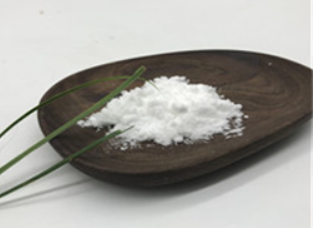
Chemical structure and reactivity:
The molecule consists of a naphthalene core (two fused benzene rings) with a hydroxyl group (-OH) at the 6-position and a carboxylic acid group (-COOH) at the 2-position. This unique structure provides both rigidity (from the fused ring system) and reactivity (from the functional groups), enabling the formation of ester linkages during polymerization. 2,6-HNA is specifically required for the synthesis of type II thermotropic LCPs (liquid crystal polymers that exhibit liquid crystallinity upon heating). Type II LCPs are characterized by their high heat resistance, low dielectric constant, and excellent flowability, making them ideal for high-frequency, miniaturized electronic applications.
Role in LCP synthesis:
In LCP production, 2,6-HNA is typically polymerized with other monomers (such as 4-hydroxybenzoic acid, 4,4'-dihydroxybiphenyl, or terephthalic acid) via melt polycondensation. The resulting LCPs form rigid rod-like molecular structures that align in the melt phase, giving them exceptional flow properties (critical for thin-wall injection molding) and outstanding thermal and dimensional stability. The unique properties of 2,6-HNA-derived LCPs include:
-
High heat resistance: Continuous use temperature up to 250-300°C (depending on specific LCP grade).
-
Low dielectric constant and dissipation factor: Critical for high-frequency signal transmission in 5G and advanced electronics (minimizes signal loss).
-
Excellent chemical resistance: Resistant to most solvents, acids, and bases.
-
Inherent flame retardancy: Halogen-free and meets stringent environmental standards (RoHS, REACH).
-
Dimensional stability: Low coefficient of thermal expansion (CTE), critical for precision electronic components.
Key applications of LCPs (and thus drivers for 2,6-HNA demand):
-
Electronics and electrical (approximately 70% of demand):
-
High-frequency connectors (USB-C, HDMI, RF connectors, board-to-board connectors) — LCP's low dielectric loss ensures signal integrity at high frequencies.
-
5G antenna components (sub-6 GHz and millimeter-wave arrays, antenna-in-package, AiP modules) — LCP substrates and housings reduce signal loss and heat generation.
-
Flexible printed circuits (FPCs): LCP films offer excellent flex life, low moisture absorption, and stable dielectric properties.
-
Miniaturized components: LCP's excellent flowability enables thin-wall molding for increasingly compact devices (wearables, smartphones, AR/VR headsets).
-
-
Automotive:
-
Under-hood components: Sensors, actuators, connectors, and electronic control units (ECUs) that must withstand high temperatures (engine bay) and aggressive chemicals (oil, fuel, coolant).
-
High-speed data connectors: Automotive Ethernet, LiDAR, radar, and camera connectors for advanced driver-assistance systems (ADAS).
-
-
Telecommunications and data centers:
-
High-speed fiber optic connectors: LCP housings for optical transceivers, connectors, and adapters.
-
Backplane connectors: Server and networking equipment connectors requiring stable electrical properties at high frequencies.
-
-
Consumer electronics:
-
Smartphone and tablet internal components: Camera modules, battery connectors, audio jacks, and SIM card trays.
-
Wearables and hearables: Miniaturized, durable connectors and housings.
-
AR/VR headsets: Lightweight, dimensionally stable components.
-
6-Hydroxy-2-Naphthoic Acid for LCP Market Summary
According to a new market research report published by Market Monitor Global, the global 6-Hydroxy-2-Naphthoic Acid for LCP market is projected to reach USD 182 million by 2031, at a compound annual growth rate (CAGR) of 5.2% during the forecast period. This steady growth is driven by expanding LCP applications in high-performance electronics, 5G communications, automotive electronics, and consumer devices, as well as increasing demand for halogen-free, low-dielectric-loss materials that comply with environmental standards.
Market Monitor Global's analysis indicates that the global key manufacturers of 6-Hydroxy-2-Naphthoic Acid for LCP include Ueno Fine Chemicals Industry (Japan) and Suqian 3E New Material (China). The 6-Hydroxy-2-Naphthoic Acid for LCP market has a very high concentration. In 2024, the global top two players collectively accounted for approximately 79.8% of total revenue, reflecting a near-duopoly market structure. Ueno Fine Chemicals (Japan) has long held a dominant position in high-purity grades (≥99.5%), with established relationships with major LCP producers. Suqian 3E New Material (China) has rapidly gained share, benefiting from lower production costs, capacity expansion, and growing domestic LCP demand. Other smaller players or potential entrants face high barriers due to the technical complexity of high-purity synthesis, rigorous quality requirements, and long qualification cycles (typically 12-24 months for a new 2,6-HNA supplier to be approved by LCP manufacturers).
In terms of product type, the Purity ≥99.5% segment is currently the largest, holding a share of approximately 96%. LCP production requires very high-purity 2,6-HNA to achieve the desired polymerization kinetics, molecular weight, and final polymer properties. Even minor impurities (e.g., isomeric naphthoic acids, unreacted starting materials, residual catalysts) can affect LCP melting behavior, thermal stability, color, and dielectric properties, leading to rejections in critical electronic applications. Grades with purity below 99.5% (e.g., ≥98%, ≥97%) are used in less demanding applications or as intermediates, but represent a small fraction of the market. The remaining ~4% includes lower-purity grades and custom formulations for specialty LCP applications.
Regarding application, Electronics and Electrical is the largest segment, accounting for approximately 70% of market share. This includes connectors, 5G antenna components, flexible printed circuits, and various miniature electronic components. Automotive is the second-largest application, driven by the increasing use of LCP in ADAS, under-hood electronics, and high-speed data connectors, accounting for a significant portion of the remainder. Consumer Electronics, Telecommunications, and Others (aerospace, industrial, medical) make up the remaining share.
Regional dynamics: North America is the largest consumer of 6-Hydroxy-2-Naphthoic Acid for LCP, with a market share of more than 50% in 2024, driven by the presence of major LCP producers (Celanese, DuPont, Solvay), high demand from the telecommunications (5G) and automotive (ADAS) industries, and stringent environmental standards that favor LCP's halogen-free, low-dielectric-loss properties. Asia-Pacific is the second-largest and fastest-growing region, with significant demand from China, Japan, South Korea, and Southeast Asia. China's rapidly expanding electronics manufacturing (including 5G infrastructure, consumer electronics, and automotive) and the growing domestic LCP production capacity are major drivers. Japan remains a significant consumer due to its leadership in LCP technology (Sumitomo, Toray, Ueno Fine Chemicals itself). Europe is a moderate but stable market, driven by automotive and telecommunications applications.
6-Hydroxy-2-Naphthoic Acid for LCP Market Dynamics
Key Market Drivers:
-
D1: Material performance and environmental compliance – LCPs offer halogen-free, low-dielectric-loss properties that meet stringent Western and Asian environmental standards (RoHS, REACH, China RoHS). As global regulations restrict the use of halogens (brominated and chlorinated flame retardants) and require low-emission, low-toxicity materials, LCP has become a preferred engineering plastic for electronics and electrical applications. This sustained compliance drives upstream demand for 2,6-HNA. Additionally, as data rates increase (5G, Wi-Fi 6/7, automotive Gigabit Ethernet, and high-speed USB), low-dielectric-loss materials become non-negotiable, strengthening LCP's market position.
-
D2: Process optimization and cost reduction – Continuous synthesis and advanced catalysis have improved 2,6-HNA purity and yield by approximately 20% in recent years, while unit costs have been reduced by approximately 10%, enhancing competitiveness against other high-performance polymers (e.g., polyetherimide, polyimide, polyphenylene sulfide). These process improvements have also reduced waste and energy consumption, aligning with green chemistry trends. Manufacturers that continue to improve process efficiency can further reduce costs, expand margins, and potentially lower the final price of LCP-based components, broadening application scope.
-
D3: Downstream application expansion – Beyond traditional telecom and automotive applications, consumer electronics (wearables, AR/VR headsets, true wireless stereo earbuds, smartwatches, and foldable smartphones) require miniaturized high-frequency components. These devices demand LCP's combination of high heat resistance (to survive soldering reflow), low dielectric loss (for antenna performance), dimensional stability (for precise fit), and excellent flowability (for thin-wall molding of very small parts). As the consumer electronics market continues to evolve toward lighter, faster, and more integrated systems, 2,6-HNA demand will grow in alignment with LCP advancements.
-
D4: 5G and high-frequency communications infrastructure – The global rollout of 5G networks (sub-6 GHz and millimeter-wave bands) is driving demand for LCP in antenna-in-package (AiP) modules, RF connectors, and substrate materials. 5G requires materials with stable dielectric properties across a wide frequency and temperature range — LCP's performance is superior to many alternatives. As 5G deployments continue globally (particularly in North America, Europe, and Asia-Pacific), and as 6G research progresses (which will demand even lower-loss materials), the LCP market — and consequently 2,6-HNA demand — will continue to grow.
-
D5: Electrification and autonomous driving – The automotive industry's shift toward electrification (EVs, HEVs) and autonomous driving (ADAS Level 2-5) is increasing the electronic content per vehicle. Advanced sensors, high-speed data links (Automotive Ethernet, PCIe over coax), and high-current connectors require LCP's thermal stability and low dielectric loss. The increasing number of ECUs and electronic components per vehicle drives growth in LCP consumption, supporting 2,6-HNA demand.
Market Restraints:
-
R1: High technical barriers to entry and limited supplier base – The synthesis of high-purity 2,6-HNA (≥99.5%) is technically challenging, requiring:
-
Selective reaction pathways to minimize isomeric by-products (e.g., 2-hydroxy-1-naphthoic acid, 1-hydroxy-2-naphthoic acid, other isomers) that would contaminate LCP polymerization.
-
High-yield purification processes (multi-stage crystallization, solvent extraction, recrystallization) to achieve the required purity.
-
Process control to avoid degradation of the thermally sensitive product (decomposition temperature 310°C).
-
Scale-up expertise to maintain consistent quality across large-scale production batches.
As a result, only a few suppliers (Ueno Fine Chemicals, Suqian 3E New Material) have the technical expertise, process know-how, and long-term quality track record to serve the LCP market. New entrants face long qualification times (12-24 months) and high capital investment, limiting competition and maintaining the concentrated market structure.
-
-
R2: Dependence on LCP demand and macroeconomic cycles – 2,6-HNA is almost exclusively used for LCP production (a small portion may be used for other specialty chemicals, but LCP is by far the dominant application). Therefore, 2,6-HNA demand is entirely dependent on LCP consumption. LCP demand, in turn, is correlated with:
-
Consumer electronics and telecom equipment shipments (which are subject to economic cycles, consumer spending, and inventory fluctuations).
-
Automotive production (which is affected by global economic conditions, supply chain disruptions, and semiconductor availability).
During economic downturns, the 2,6-HNA market may experience demand volatility, as seen during the 2020 COVID-19 pandemic and the 2023-2024 automotive semiconductor shortage.
-
-
R3: Substitution risk from alternative high-performance polymers – While LCP offers a compelling combination of properties, other high-performance engineering plastics may compete in specific applications:
-
Polyetherimide (PEI, Ultem®): High heat resistance, good dielectric properties, and excellent dimensional stability. PEI may substitute for LCP in certain automotive or aerospace applications where lower dielectric performance is acceptable.
-
Polyimide (PI, Kapton®): Extremely high heat resistance and excellent flex life; used in flexible circuits and high-temperature applications. PI is more expensive but may be preferred for extreme environments.
-
Polyphenylene sulfide (PPS, Fortron®): Good thermal and chemical resistance, lower cost than LCP, but higher dielectric loss and less dimensional stability. PPS may substitute in less demanding applications.
-
Modified polyphenylene ether (mPPE, Noryl®): Lower cost, good dielectric properties, but lower heat resistance than LCP. May substitute for LCP in lower-temperature connectors.
Substitution limits market share growth for LCP in price-sensitive or performance-insensitive applications, which in turn limits 2,6-HNA demand growth.
-
-
R4: Raw material and energy price volatility – 2,6-HNA synthesis requires various raw materials (including naphthalene derivatives, catalysts, and solvents) and significant energy input (heat for reactions, purification, and drying). Fluctuations in crude oil and petrochemical prices (from which many raw materials are derived) and energy prices (natural gas, electricity) affect production costs. In periods of high raw material or energy prices, 2,6-HNA manufacturers may face margin compression unless they can pass on costs to LCP producers.
Key Market Trends:
-
Continuous synthesis and advanced catalysis: Manufacturers are investing in continuous-flow synthesis and advanced catalytic processes to improve 2,6-HNA purity, yield, and cost-efficiency. These innovations are expected to further reduce unit costs and improve quality consistency.
-
Sustainability and green chemistry: There is growing emphasis on reducing solvent waste, improving energy efficiency, and using bio-based or renewable feedstocks in chemical synthesis. 2,6-HNA manufacturers are exploring greener synthesis routes (e.g., using less hazardous reagents, reducing solvent consumption, improving atom economy) to meet evolving environmental standards and customer sustainability goals.
-
Capacity expansion in China: Suqian 3E New Material and other potential Chinese players are investing in capacity expansion to serve growing domestic LCP demand and potentially export to global markets. This may reduce the market share dominance of Japanese suppliers in the long term and increase competition.
-
Development of new LCP grades and application spaces: LCP producers are developing new grades with:
-
Higher heat resistance (for soldering reflow at >260°C).
-
Lower dielectric loss (for higher-frequency 5G and 6G applications).
-
Improved processability (for complex geometries, thin-wall molding, and high-speed manufacturing).
-
Enhanced recyclability (advancing towards circular economy).
These new LCP grades will require consistent, high-purity 2,6-HNA, ensuring sustained demand.
-
-
Shift toward lighter and more integrated electronic systems: The trend toward lighter, faster, and more integrated electronic systems (smartphones with more features, wearables with multiple functions, AR/VR headsets with high-resolution displays and sensors, and foldable/displays) is driving demand for miniaturized, high-frequency components that leverage LCP's unique properties. This trend supports long-term 2,6-HNA demand growth.


