 +1-3236076188
 sales@marketmonitorglobal.com
 Log In
  Log In
 Home>News>Global Functional Textile Fabric Market to Reach $12.92 Billion by 2030, Growing at 3.7% CAGR
Global Functional Textile Fabric Market to Reach $12.92 Billion by 2030, Growing at 3.7% CAGR
Friday,10 Jul,2026
Functional Textile Fabric: Definition and Principles
Functional fabrics (also called functional textiles) are materials that contain integrated elements for controlling or changing a given application. For example, some fabrics may wick moisture to keep the user cool, contain fibers that minimize odor, resist flame, or block UV radiation. Functional textiles are textile materials produced with inbuilt functionalities to meet specific end-use requirements beyond their basic aesthetic or covering purpose. The functional properties are incorporated at different stages of production — fiber, yarn, fabric, or garment stage — using chemical agents, finishes, coatings, or advanced fiber technologies.
Key functional properties:
-
Antistatic: Prevents static electricity build-up, critical for electronics manufacturing, cleanrooms, and military/emergency services.
-
Moisture-wicking: Transports sweat away from the skin to the fabric surface for rapid evaporation, enhancing comfort in activewear and sportswear.
-
Antimicrobial/Anti-odor: Inhibits bacterial and fungal growth, reducing odor and infection risk.
-
UV-protecting: Blocks or absorbs harmful ultraviolet radiation.
-
Flame-retardant: Resists ignition and slows flame spread, essential for protective clothing, public transport seating, and children's sleepwear.
-
Water-repellent/Waterproof: Resists water penetration while maintaining breathability.
-
Self-cleaning: Lotus-effect or photocatalytic surfaces that break down dirt and stains.
-
Anticrease: Reduces wrinkling, improving appearance and reducing maintenance.
-
Thermoregulating: Phase-change materials (PCMs) that absorb and release heat for temperature regulation.
Incorporation methods:
-
Fiber stage: Adding functional additives to polymer melts or solutions before spinning (e.g., flame-retardant fibers, antimicrobial fibers).
-
Yarn stage: Using special yarn structures (e.g., conductive yarns, core-spun elastane).
-
Fabric stage: Applying finishes, coatings, or laminations (e.g., DWR — durable water repellent, antimicrobial finishes, UV blockers).
-
Garment stage: Final treatments (e.g., antistatic sprays, protective coatings).
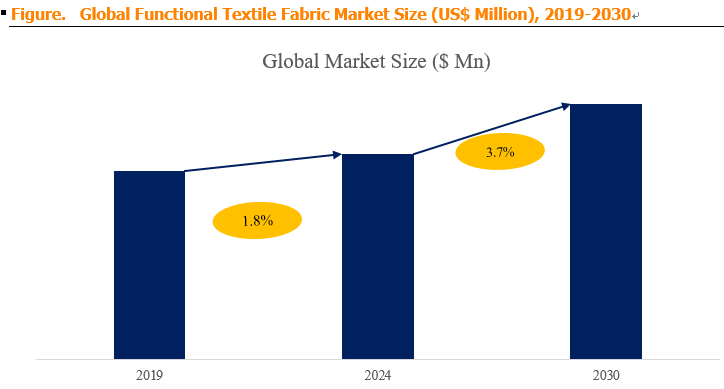
Functional Textile Fabric Market Summary
According to a new market research report published by Market Monitor Global, the global Functional Textile Fabric market was valued at USD 9,901 million in 2023 and is projected to reach USD 12,921 million by 2030, at a compound annual growth rate (CAGR) of 3.7% during the forecast period. This steady growth is driven by increasing consumer demand for performance and comfort in activewear, growing awareness of health and hygiene (antimicrobial, anti-odor), rising safety regulations in workwear and protective clothing, and the expanding application of functional textiles in automotive, medical, and military sectors.
Market Monitor Global's analysis indicates that the global key manufacturers of Functional Textile Fabric include Gore (USA), Royal TenCate (Netherlands), Milliken (USA), Carrington Textiles (UK), and Winnitex Group (Texhong) (China/Global). In 2023, these companies collectively accounted for approximately 13.50% of total revenue, indicating a highly fragmented market with numerous global, regional, and niche players. The market is characterized by intense competition, rapid innovation cycles, and a trend toward consolidation as larger players acquire specialized functional textile producers to expand their portfolios.
In terms of product type, Antistatic Fabrics is the largest segment, holding an 18% share. Antistatic properties are critical in electronics manufacturing (preventing ESD — electrostatic discharge damage), cleanrooms, and protective clothing (military, firefighting, emergency services), as static electricity can cause explosions, equipment failure, and safety hazards. Other significant segments include Moisture-Wicking/Activewear Fabrics, Antimicrobial Fabrics, Flame-Retardant Fabrics, Water-Repellent/Weatherproof Fabrics, UV-Protective Fabrics, and Others (self-cleaning, thermoregulating, anticrease).
Regarding application, Apparel Textiles is the largest segment, accounting for 72% of the market. This includes:
-
Sportswear/Activewear: Moisture-wicking, antimicrobial, UV-protective, and stretch fabrics.
-
Outerwear: Waterproof, breathable, windproof, and insulated fabrics.
-
Workwear/Protective Clothing: Flame-retardant, antistatic, high-visibility, and chemical-resistant fabrics.
-
Underwear/Intimate apparel: Antimicrobial, moisture-wicking, and soft-touch fabrics.
-
Fashion/Everyday wear: Anticrease, easy-care, and UV-protective fabrics.
Industrial/Technical Textiles (automotive, aerospace, military, medical, filtration, geotextiles) account for the remaining 28% and are growing at a faster rate due to stricter safety and performance regulations.
Regional dynamics: Asia-Pacific is the largest and fastest-growing market, driven by China's dominant textile manufacturing base, rising middle-class consumer spending on performance apparel, and increasing industrial applications. Europe and North America are mature markets with high demand for functional textiles in activewear, outdoor apparel, and protective clothing, driven by strong consumer awareness and strict safety regulations (e.g., EU flame-retardant standards, US NFPA standards). Latin America and Middle East & Africa are smaller but growing markets.
PYBJFX4[2GN3F9[Z3D.png)
Functional Textile Fabric Market Dynamics
Market Drivers:
-
D1: Growing demand for performance, comfort, and durability in apparel – Consumers increasingly seek apparel that offers more than basic coverage — they desire garments that are comfortable, breathable, moisture-wicking, odor-resistant, and durable. The rise of activewear, athleisure, and outdoor lifestyles is driving demand for functional fabrics that enhance athletic performance and everyday comfort.
-
D2: Increasing health and hygiene awareness – The COVID-19 pandemic has heightened consumer awareness of hygiene and health. Antimicrobial, antibacterial, and antiviral fabrics are increasingly sought after for use in face masks, medical textiles (surgical gowns, drapes), and everyday apparel (socks, underwear, activewear) to reduce infection risk and control odors.
-
D3: Stricter safety regulations in protective clothing and workwear – Occupational safety regulations globally (e.g., EU PPE Regulation, US NFPA, Chinese national standards) are driving demand for high-performance protective fabrics. Flame-retardant, antistatic, high-visibility, chemical-resistant, and cut-resistant fabrics are mandatory in industries such as firefighting, oil & gas, construction, mining, and electrical engineering.
-
D4: Innovation in fiber and finishing technologies – Advances in polymer chemistry, nanotechnologies, and textile finishing are enabling new functional properties and improving performance, durability, and comfort. Examples include:
-
Microencapsulation: Embedding phase-change materials, fragrances, or bioactive agents.
-
Plasma treatment: Surface modification for improved wetting, adhesion, and functional finish durability.
-
Nanocoatings: Superhydrophobic, self-cleaning, and UV-blocking finishes.
-
Biopolymer and sustainable finishes: Using bio-based antimicrobials, plant-based water repellents, and natural flame retardants.
These innovations are expanding application potential and improving cost-effectiveness.
-
-
D5: Sustainability and circular economy trends – Consumers and brands are increasingly prioritizing sustainable materials and processes. Functional textiles are not an exception, with growing demand for:
-
Recycled functional fibers: Using recycled PET, nylon, and other polymers.
-
Bio-based and biodegradable functional finishes: Plant-based water repellents, bio-based antimicrobials, and natural dyes.
-
Durable finishes: Finishes that remain functional after multiple washes, extending garment life and reducing waste.
-
Eco-friendly manufacturing processes: Waterless dyeing, low-energy finishing, and reduced chemical usage.
Sustainability is becoming a key differentiator in the functional textile market.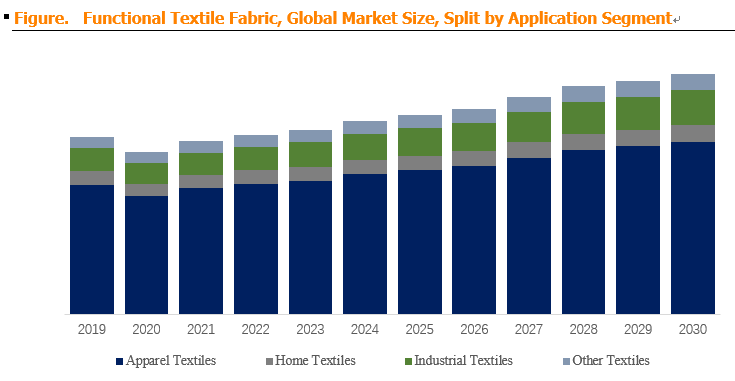
-
Market Restraints:
-
R1: High cost and complexity of functional finishes – Functional finishes often require expensive chemicals, specialized equipment, and additional processing steps, increasing production costs and time. Higher costs can be a barrier to adoption in price-sensitive markets.
-
R2: Environmental and regulatory compliance challenges – Many functional finishes and chemicals face regulatory scrutiny due to environmental and health concerns:
-
PFAS (per- and polyfluoroalkyl substances): Used in water-repellent finishes, PFAS are being restricted or banned in many jurisdictions (EU, US, China) due to their persistence and toxicity.
-
Formaldehyde: Used in anticrease and durable press finishes, subject to strict limits.
-
Heavy metals: Used in some antimicrobial finishes, facing restrictions.
-
Bisphenols and phthalates: Also subject to regulatory restrictions.
Manufacturers must invest in developing and qualifying safer alternatives while maintaining performance, adding R&D and compliance costs.
-
-
R3: Durability and washability challenges – Many functional finishes are not durable to laundering, losing effectiveness after repeated washing. This is particularly an issue for everyday apparel (where consumers expect long-lasting performance) and for protective clothing (where finish durability is critical for safety). Improving finish durability remains a key technical challenge.
-
R4: Market fragmentation and intense competition – The functional textile market is highly fragmented, with many suppliers competing on price, innovation, and customer relationships. Intense competition pressures margins and makes it difficult for smaller players to invest in R&D and scale production.
6.png)
Market Opportunities:
-
O1: Development of PFAS-free, eco-friendly water repellents – Growing regulatory pressure on PFAS (per- and polyfluoroalkyl substances) is driving investment in PFAS-free water-repellent finishes, such as:
-
Bio-based waxes and oils.
-
Hydrocarbon and silicone-based alternatives.
-
Nanocoatings (e.g., silica-based, non-fluorinated).
First movers in developing commercially viable, high-performance PFAS-free solutions will capture market share and command premium pricing.
-
-
O2: Expansion in medical and healthcare textiles – The healthcare sector offers significant opportunities for functional textiles:
-
Antimicrobial and antiviral fabrics: For gowns, drapes, masks, and linens.
-
Wound care: Bioactive and antimicrobial wound dressings.
-
Smart medical textiles: Wearable sensors for vital sign monitoring (heart rate, temperature, oxygen saturation).
-
Antistatic and antimicrobial fabrics for cleanrooms.
-
-
O3: Smart textiles and wearable technology integration – The integration of electronics into textiles — e-textiles — is growing:
-
Wearable sensors: Heart rate, temperature, respiration, and motion monitoring.
-
Heated garments: Conductive fabrics for heating elements in outerwear, medical, and industrial garments.
-
Illuminated fabrics: LED-embedded fabrics for safety, fashion, and signaling.
-
Energy harvesting: Textile-based solar cells and piezoelectric materials.
Smart textiles are currently a small but fast-growing segment, with significant potential in health, sports, military, and fashion.
-
-
O4: Growth in automotive and transportation textiles – Functional textiles are increasingly used in automotive interiors:
-
Flame-retardant fabrics: For seating, headliners, and trim to meet safety regulations.
-
Acoustic fabrics: For noise reduction in cabins.
-
Antimicrobial fabrics: For high-touch surfaces (steering wheels, seats, door panels).
-
Lightweight and durable fabrics: Contributing to fuel efficiency and EV range.
As automotive manufacturers seek weight reduction and improved passenger experience, demand for functional textiles will grow.
-
-
O5: Development of durable and sustainable functional finishes – R&D is ongoing in:
-
Durable finishes: Cross-linking and covalent bonding to improve wash-fastness.
-
Bio-based finishes: Plant-derived antimicrobials, waxes, and flame retardants.
-
Self-healing finishes: Coatings that repair themselves after mechanical damage.
-
Recyclable functional textiles: Designing fabrics for end-of-life recyclability while maintaining functional properties.
-
WKEGPWXMLP.png)
Industry Trends:
-
Dominance of antistatic fabrics: Antistatic holds ~18% share, driven by demand from electronics manufacturing and protective clothing.
-
Apparel as the largest application: Apparel accounts for 72% of the market, driven by sportswear, activewear, and protective clothing.
-
Highly fragmented market: Top players account for ~13.5% share, reflecting many niche and regional competitors.
-
Innovation in sustainable finishes: PFAS-free water repellents, bio-based antimicrobials, and durable finishes are growing.
-
Smart textiles and wearables: Integration of sensors, conductive fibers, and electronics is creating new growth opportunities.
-
Stricter safety regulations: Regulations driving demand for flame-retardant, antistatic, and protective textiles.
Industry Structure and Competitive Dynamics
The global Functional Textile Fabric market is characterized by a highly fragmented competitive landscape:
-
Global leaders (Gore, Royal TenCate, Milliken, Carrington Textiles, Winnitex Group): These companies have strong portfolios, global distribution networks, and established relationships with major apparel brands and industrial customers. They invest heavily in R&D and hold key patents in functional textile technologies.
-
Regional and specialist players: Numerous regional and specialist players focus on specific applications (e.g., medical textiles, protective clothing, sportswear) or technologies (e.g., antimicrobial finishes, water repellents, smart textiles).
Key success factors in this market:
-
Innovation and R&D: Developing new functional properties and improving performance and durability.
-
Cost competitiveness: Efficient production and supply chain management.
-
Customer relationships: Partnerships with apparel brands, industrial OEMs, and government agencies.
-
Sustainability credentials: Offering PFAS-free, bio-based, and recyclable products.
-
Regulatory compliance: Meeting global and regional safety and environmental standards.
-
Application expertise: Deep understanding of industry-specific requirements (e.g., automotive, medical, military).


